Sunday, 20 April 2014

Down on the farm with the Neesons

The farmhouse and two of the wool shed- covered livestock yards.
The drive to Taumarunui took hours, it didn't particularly look far on the map, as I sat in the back of my cousin-uncle's shiny red Holden I watched as the countryside flashing past changed from the flat pasture land of the Hauraki plains the rolling hills and then to what we'd call mountains back at home. Now and then we saw the summit of a volcano through the clouds, Auckland and parts of the Coromandel reminded me a lot of southern Devon and Cornwall, now I felt as if I was somewhere different altogether, unfamiliar and foreign.
We stopped off for some dinner in McDonald's as it was the only place in town open at that time of night, several local people were there too, having something to eat and drink, sitting around and chatting. I asked how long it would take to drive to the farm. I expected fifteen minutes.
"About an hour" Lyn said.
She wasn't lying, the car headed off down the 'Forgotten World Highway' crossing numerous small bridges (ONE. LANE. BRIDGE. as it says on the road) and beginning to take tighter and tighter turns up and down increasingly sheep hillsides. The tarmac ran out after around twenty  minutes to be replaced by loose gravel, the road narrowed to a single carriage width and stayed there, we continued further into the darkness. Eventually we crossed a small bridge where Alex said that his farm basically began, the bush along the side of the road and the darkness over the hills stopped me seeing too much. We went to bed pretty much as soon as we got in, when I woke up I looked out of the window and saw this:
Tell a lie, same view, different day. The wheelbarrow is just back from ford concreting.
The farmhouse stands on the top of a hillock in some stunning country. Paddocks stretch away in all directions, the Ohura river flows lazily past this time of year in the bottom of the steep ravine across the road, surreal shades of green for this time of year come from native trees that contrast to more recently planted imports with their leaves falling for the autumn. The grass clings to the steep hillsides except where the livestock have worn down a little track and the papa is exposed. The first impression of the place was that it is so incredibly quiet here; there are no major roads for a long, long way, no through roads, no neighbours for 10km, not even airliners passing overhead. Instead the sound of livestock, the river and the wind through the grass and trees is the background noise. Nowhere I've ever lived has been this isolated and quiet. It's good, for me right now, it is good.

I wrote to my cousins a while back asking to work for them for a while, I wasn't sure what work I would do or could do, I was pretty much looking forwards to taking time to learn something new be it skills or knowledge. I was also looking forwards to staying in one place for a while and getting to know a side of the family that I had never met. I was glad that the first major job was not too unfamiliar, a ford across a creek had been destroyed by the heavy rains eroding the soft rock beneath. The whole gang turned out to prepare the ford, mix the concrete and to put the stuff in the correct place and shape.
Concreting the ford with Tim, Callum and Alex
 I found myself wheeling concrete back and forth one afternoon, then the next day mixing and barrowing the stuff around, the next day the same again. The raw cement ate away the moisture from the skin, got into the eyes and mouth and collected in the bathtub after the nightly showers. The wheelbarrow handles gave me blisters on my hands, blisters that subsequently burst and cracked to be filled by concrete. 
However, I'm not moaning. I am happy: There is so much to be satisfied about in this type of work. Sure I got nasty blisters that stung like hell for a while (especially with that lovely calcium hydroxide sloshing over them) but every barrow-load I mixed, shifted or troweled actually went into building something that would be useful and last (hopefully) for a while. For the most of the fords construction it was just Tim, Callum and I working, we broke up the task into sections based upon tractor-trailer loads of builder's mix and cement bags and an honest day's labour. We drove our vehicles to the job every day in the cool morning air, dew on the grass soaking shoes and lower legs on the way. In the tired dried-sweat evening we would pack the tools away, put the site into a decent sort of state, clean the tools and set off along the dusty paths leaving great cream coloured pumice dust clouds behind on our way back to the farm and a cold beer. I decided I like concreting.
The ford in action after completion, upstream is to the left, you can see that the temporary culvert has been blocked and water is beginning to collect behind the dam, soon to flow over.
However, the best thing about working on a farm is that the work varies. Being a lamb and beef farm most of the day-to-day work involves moving livestock around. The act of collecting livestock from a paddock (actually a section of grazing land, not just a field) is called mustering, my cousins muster their paddocks with dogs which work in small packs to herd the livestock to where they have to be. One man and his dog this ain't.

The landscape created when soft ash and clays are eroded by heavy rain.
Mustering a hill paddock requires good control over a group of dogs at a distance of around 1,500m on an average. 'Filthy bush-mongrel' sheep tend to hide among manuka and scrub and in the trees along the ridge line. Someone has to go to the top on the hill and run them off towards the rest of the rest of the herd, again and again for each little group of animals. This is why dogs are essential for this type of work. To cut a long explanation short they do all the running about, because they cannot see far at times due to scrub and the fact that they are dogs the shepherd does the thinking for the dogs and communicates via a series of shouted and whistled commands. Dogs are livestock farming, a good shepherd looks after his trained hound companions first, then himself. They even have their own little trailer:
The 'A' team on their way to muster a paddock, Stig, Boss and Kai, bow!
The paddock Tim is shown mustering is across the Ohura river from the farm and downstream, it overlooks the falls and the confluence with the Wanganui river and miles and miles of hills and woods. It truly is a spectacular place to work. Just imagine doing this every day.
Driving to the river crossing, several months with little rain has made the river quite low.

I'm sat on the back of Tim's quad bike at this point, not on piggy-back as it appears. Something I noticed is that both Tim and Alex continuously scan the landscape when they're out and about. This is very useful for spotting sick animals or animals where they shouldn't be, things like fences that need mending and the condition of the paddocks.
Small groups of sheep were scattered over the hillsides, altogether there were around 200 there,  the grazing stretched from the river all the way up to the ridges on top of the hills. The change in elevation was at least 400m. Dogs are essential here as in order to push the scattered sheep into a herd and along the lane to the shearers they must go to the top of the ridge ('run to the top!'), bark to get the sheep moving ('speak!') and push them along ('move 'em up!').
The Huntaway dogs move some sheep along.

Sometimes a few sheep hide in the scrub where the dogs cannot see them, then the dogs have to go all the way back up and chase them down.
Controlling the dogs as they muster the sheep is a challenging job on good days, in bad weather it must be pretty damn frustrating. Sheep who break off from the main herd are a problem and slow the mustering down as the dogs have to be recalled to the shepherd and sent out again in a new direction to round up these awkward characters. The dogs get tired and as the morning goes on the temperature climbs until heat exhaustion is a possibility for them and the sheep on their way to the wool shed.
There is something odd about sheep psychology, they behave much more predictably in large groups, in smaller numbers they are more likely to vanish into some undergrowth and on their own they have a tendency to stay put.  

Some lambs who emerged from the Manuka after we passed by.

Tim gets the dogs to move the sheep out of the gullies on the left towards the path to the right.

Lambs are much more difficult to muster than ewes; another two to send the dogs back for.

Not a bad day for that kind of thing...
Occasionally a sheep will stop and refuse to move, sometimes they are not well and collapse soon afterward. This 'playing dead' may have evolved as a last-chance defence against predators or just as a physical manifestation of what we would call depression due to poor health. In any case they collapse and stay there in a state of shock. As we had left the dog trailer at the foot of the hill we had to put this sheep on the bike.

The dogs clear the ridge of reluctant sheep, Stig had never worked this far out before and in doing so well earned himself an extra biscuit for tea.

The north-facing slopes heat up fast.

The sheep move towards the bottom gate, down and along the contours of the hills.
Mustering the lambs for shearing is a tremendous effort over three or four days where everybody has a job to do, by the third day everyone is quite tired but the job must be finished. By now the sheep had been driven downwards to the track above the Ohura river, Alex had been clearing and adjacent paddock and had arrived downhill from us in order to put the herds together to drive them up the track to the wool shed across the river.
The lambs join the mob from the other paddock and are moved by the father and son team on Alex and Tim.

Alex waits with his dogs to head off the lambs and get them going in the right direction.

The combined pack of dogs push the lambs along the track.

I must say, this is my favourite picture

What happened to the sheep who dropped? He went in the dog trailer of course together with another one who collapsed on the way, a quick look at their gums showed they were both very anaemic; a sure sign of barber's pole worm. Not to worry- nothing a dose of wormer won't fix.

'well, this is awkward'
A team of shearers was working away from early morning in one of the wool sheds, they work very, VERY hard and are well looked after by Lyn and Monique who send out food at regular and predetermined intervals for breaks ('smokos') and lunches.
The shearers sweaty vests are changed and hung out.
The shearing gang consisted of four shearers at work at any one time, two sweepers to collect up the wool into a pile and another to pack it into to the waiting wool-sacks and compress it. The atmosphere inside the shed is hot, noisy and smelly while constant activity means there is a feeling that the process is almost fully mechanised while instead it is in fact very labour intensive. The gang work as machines, or perhaps bees all day.
The Shearers at work

This guy sustained a rate of one sheep sheared every 1m5s all day long, the four shearers got through at least 300 sheep a day each.


Wool going into the wool sacks for compression.

Sheep waiting in their pens for their date with the clippers!
With the shearing done the work is was not over, Callum gave each a dose of wormer (drenching), counted them and then they had to be put back in a paddock some distance away. These were long days indeed.

To my surprise you can also muster cattle with dogs, thankfully for us as the landscape would be difficult for two-legged creatures to chase cattle around on. However the process is a little different as the cattle are not particularly scared of the dogs instead seeing them as a nuisance and a threat to their calves. As a result they are a little more stubborn than sheep and often charge the dogs. However they still have a strong herding instinct and this can be exploited to get them moving in the right direction. The skill of the shepherd is not just controlling the dogs to gather the stock from the paddocks but to understand the behavior of the animals; knowing when to put pressure on them by getting the dogs noisy and close to their heels or when to take the pressure off by backing off. The most impressive handling I've seen is where the dogs are called off and the natural behavioral patterns of the cattle drive these huge beasts exactly where we want them to go.
Alex Neeson at work.

The dogs moving cattle along.

The cattle are being mustered towards the path of least resistance, in this case the track along the river to the right.
Some cattle can be a little crazy and lash out (as I've found out working in the cattle yards when half a ton of beef gets a little tetchy) as well as go pretty much where they want to go. Not surprisingly some of these tendencies seem to be heritable and some of the herd are known for their 'madness'. I find this fascinating as there are many parallels between the human inheritance of traits such as aggression. A sheep and beef farm is  a good place for observing human nature.
The cattle cross the ford, yes, it's a ford, the river is super-low due to drought.

Huntaway dogs drive the cattle up the lane to the covered yard.Woof.

Around the S-bend

And into the yards.
Luckily for me there is more going on than moving livestock around (as I can't do that). There are numerous repairs to undertake and land to manage, as well as fords to build there are culvert pipes to lay, tracks to improve and fences to repair. Fencing itself is an art-form of unrivaled precision. Fencers must pride themselves on the even-ness of the distribution of their batons, the uniform nature of the wire, the spacing and angle of the staples.....
I did it for a couple of afternoons in the hot sun on a dusty, thistle-y hillside. I can see how after a few days of doing that you would be over it. Oops, apologies for the kiwi-ism.

Callum moving the fencing trailer with the air compressor for the staple gun into position. Callum is wearing blue underwear.

The thistle fence line awaiting it's batons

The finished article, thistles bashed.

The wool sacks are loaded on to the lorry.

Ready to go! Lamb's wool.
Living and working with the NZ Neesons was an excellent idea, I can't remember where I got the idea, but it was a good one. I love making all of the obvious comparisons that living with them allows. The best part is working alongside them, I think that gives me the best insight into who they are, what makes them tick. I'm here in New Zealand until mid-August so I have plenty of time to consider my next moves. I think I'll need it.


Saturday, 29 March 2014

Arrival in Auckland to the Coromandel


The man chose a seat reasonably far from the other passengers, the airport waiting lounge was filling slowly with passengers as they passed through the routine security checks but most chose to sit close together by the door to the jet bridge. Fine beads of perspiration clung to his temples, the guards at the terminal gate had almost derailed his plans when they found he had no printed boarding pass, however he somehow convinced them using all his nerve and just a little pressure from his imposing height and English accent he had convinced the military police guarding Chennai airport to let him pass straight through their routine terminal security checks.

His large bag passed into the airport baggage handling system easily and in spite of his travel-wearied appearance he had sailed through the hand baggage and metal detector tests. The staff had not been interested in his possessions.

If only they knew.


The man stroked his bearded chin as his laptop computer started up, two policemen in khaki walked closely by, swinging their long bamboo sticks, but didn't stop. When they had passed he removed a small plastic sandwich bag from a hidden compartment in his bag  and selected a SIM card from the range of international cards available to him. He turned off his phone, took off the plastic casings, removed the Indian card and replaced it with a more useful one. The clutter on his lap and the smooth practiced hand motions attracted the attention of an undercover security man. He sat in his shabby blue suit a little away and opposite the man. A quick glance revealed the policeman's trousers wrinkled around the knees and jacket slightly frayed at the cuffs. He wore this outfit everyday in an effort to blend in with the diverse herds of multinational passengers but had ended up just looking like an undercover policeman. The man finished adjusting his phone and began to log into the airport free WiFi. His smartphone buzzed with an incoming message and he carefully and efficiently transferred the code from the phone to the open pop-up window on the laptop. His face showed little emotion, there was little sign of what he had just accomplished on his person, just a bead of sweat clinging to his temple. The security man got bored by the lack of activity and got up to stretch his legs, moved his stiff muscles back and forth and rocked off from the heels to walk around behind the man. He had sat in an awkward spot making it difficult to see what was on his computer screen, the security man was quickly losing interest in the stranger, his manners did not arouse any curiosity, in fact it might have been contrived to do the opposite.


Half the way around the world a small amount of money was deducted from a modest current account and routed to two organisations, one was to provide transport from the man's destination on the other side of the world and another was for a place to spend the night. The man had a special interest in making sure that this was a particularly safe place, a place that would draw no particular attention to himself. Just as the last transaction was complete the internet session timed out and the connection closed. The man closed down his electrical devices and put them carefully away in another set of well-practiced operations. He then walked over to buy a black coffee from a bored-looking salesman in a shabby looking coffee stand near the entrance to the departure lounge. He handed over the last of his small change and walked briskly to the line at the departure gate joining the end just as it reached the passport check. The airline staff were briefly puzzled by the difference in appearance between the man standing in front of them and the photograph in the passport. The quality of the photograph left a lot to be desired however and the man did now seem to have grown his beard which could indeed explain the differences in appearance. Of course the check was too brief to go beyond confirming the passengers identification and it's corresponding boarding cards. 

24 hours later, two long breaks in Kuala Lumpur and Sydney airports and 10 hours of flying the man looked from the oval window next to him to see the sun setting over the Tasman sea. In minutes his flight would be  landing in Auckland and the preparations he had made in in India would come into play. Sleep had been difficult during the journey but he had snatched two hours in the shortened night of an eastward flight. The landing jolted him alert in any case, it was time to act. He was one of the first to leave the parked aircraft and moved in the leading group of passengers to passport control, trying to find which line would get him through the fastest with the least possible hassle. 

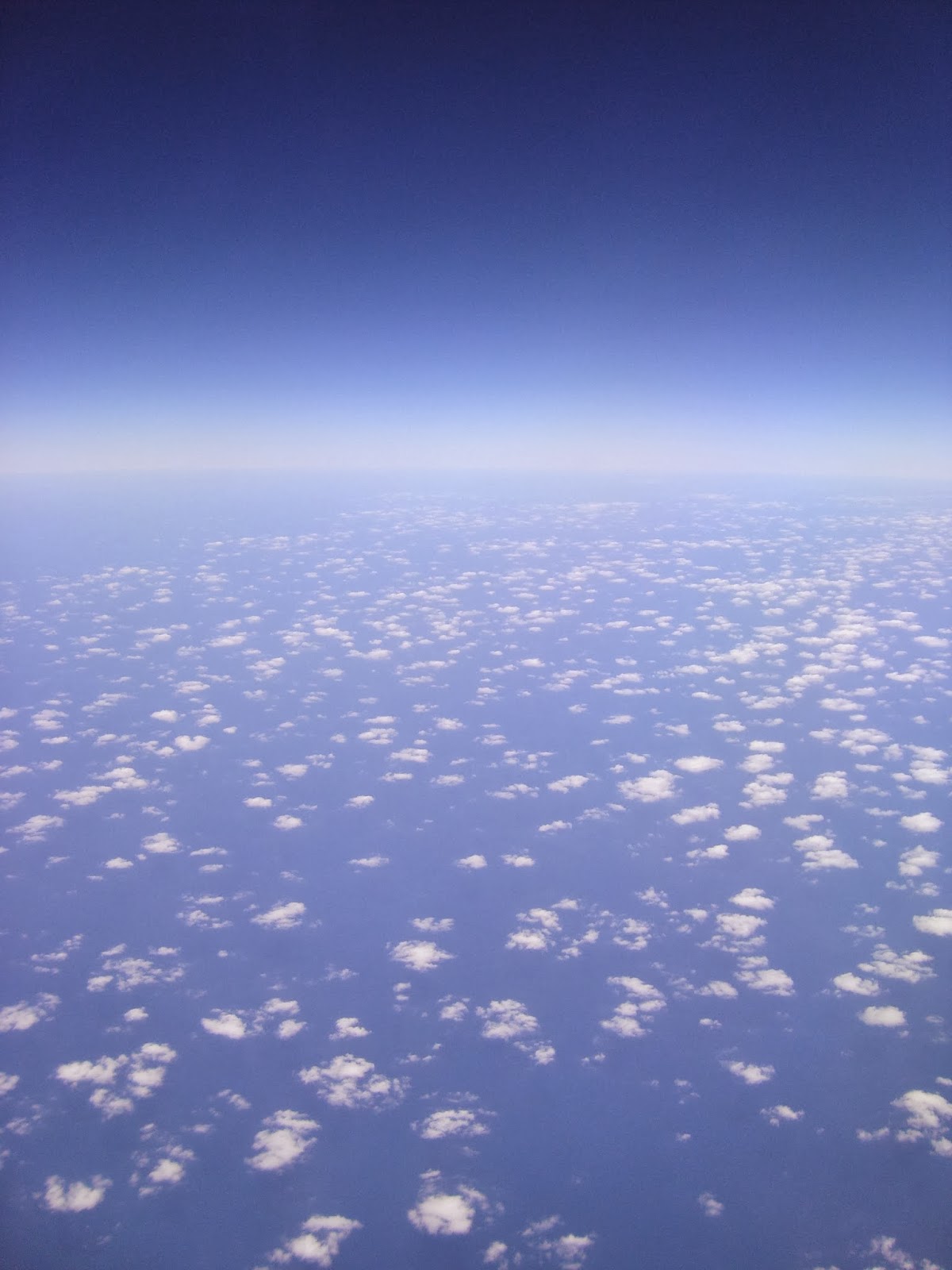
Storm clouds over the Indian Ocean
If he arrived after 2200hrs local time it would be too late, but first the almost insurmountable obstacle of Anglo-Saxon bureaucracy: 
The man waited his turn behind a German-speaking tourist who was trying to explain his travel plans to the immigration officer, something about the tourist's story wasn't adding up to the man behind the desk. Where was he going? How long was he planning to spend there? How was he planning on getting home? The man did not let his irritation show externally, any sign of restlessness could be misconstrued as an outward sign of a person who was hiding something. Finally the tourist was granted his visa and the man advanced from the yellow line. The man had taken time over making the details on his immigration form match up. The contact details were correct and the addresses were accurate. The immigration officer stamped the passport without even looking up and did not reply to the friendly thank-you he received in return. The man walked quickly to the baggage claim area to see if his bag had made it through the two transfers successfully. It emerged from the chute after a few minutes and the man carried it toward the 'nothing to declare' exit aisle.

Hours of preparation in a budget hotel room in Chennai were now about to be put to the test; the 100 Rupee flip-flops had to be discarded in spite of their mileage and novelty value, they had too much of India ingrained into them. Too much of where he had been. They scrubbed up fairly well, yet they might well have attracted the attentions of an diligent customs official on the lookout for filth. Invited a more detailed search. Given the game away.
Before cleaning the outside with a wet cloth the man had turned his bag inside out, shaken and beaten it over the shower tray and made sure that all that would fall out did so there, an orange seed from somewhere, possibly Kalamata, fell out, one or two insect wings, a Karnataka bus ticket, several pieces of tissue and a lot of grit could have made his arrival in Auckland quite difficult and expensive. Moreover he had no time to deal with customs; he had a mission to carry out. His shoes were spotlessly clean for the same reason. A great achievement considering where they had been.
The man walked calmly but purposely by the sniffer dogs, trained to detect smuggled drugs, explosive and contraband fruits and vegetables. To his surprise they payed him no interest whatsoever. The levels of residue on his clothes must have diminished over the past 48 hours, in any case, he was over the first hurdle.  He handed the customs declaration form to the official waiting behind yet another desk. All available 'NO' boxes were crossed, The female officer ran through the list of questions quickly, the man replied in a tone appropriate to the situation, he made sure not to give non-verbal cues that would betray one negative's difference to another. 
The official made a joke about the man having nothing with him. They both laughed. The backpack weighed 25Kg. The man was waved through. The metal detectors did not present a problem, of course.

Transport was waiting just outside the terminal, it would take him directly to his destination. His bags were loaded into the trailer and after a short wait for more passengers the minibus moved off into the night. After a 45 minute ride that the man used to exchange small-talk with the travelers on the seat behind he arrived at his destination.
The building was square, squat, modern and extensively glazed over it's two above-ground floors. It resembled an anonymous office building from the 1980's. The ceilings visible in the lit rooms had florescent lighting strips set among the suspended rockwool tiles. the tops and ends of bunkbeds betrayed the buildings current but not intended purpose. The man carried his bags to the only entrance, two guards dressed as backpackers stood around smoking and chattering in french. "Bonsoir" and he was through to the operations desk where he checked in using his cover as a tourist, paid up front in cash and was given the key. He walked down several flights of stairs, past another set of French guards in the kitchen, and down a further flight of stairs into the subterranean levels. Finding the room gave him some difficulty as they were not numbered sequentially. It was also incredibly hot and airless. The man did not ponder the inhumanity of confining people down here, the prisoners would soon be free. He found room 26 and opened the door. In the darkness he saw a room barely large enough for the two bunk beds placed within it. There was no natural ventilation only a hastily constructed vent in the wall leading to the corridor. The only light was from an adjoining room through a narrow strip of glass bricks which presumably could be switched on and off when ever the captors wanted in order to disorientate the prisoners and make them susceptible to interrogation. At the moment it was on bathing the room in a orange half-light. Under the row of glass bricks a figure lay unconscious, presumably overcome by the heat and airlessness, below a roughly bearded face peered out of the shadows in expectation. How long had they been here? How long had they waited here without hope of rescue?

The man would save them.

Auckland by night
Sorry 'bout that.
I'm not joking about the room, it was an airless former boiler room in the basement of the hostel. I met Hendrik and Beccy from Germany in exactly the same circumstances (almost), the next day I negotiated a better room for the three of us with an actual window that opened! On the first night I went for an orientation walk around Auckland, I was still in awe that I hadn't been mobbed at the airport by unscrupulous rickshaw drivers, the streets seemed almost too clean and the air smelled almost too fresh. Sure I was hassled for a cigarette and asked for change a dozen times, but I could get that back home. Arrival in New Zealand was the anti-rude shock. It feels ever-so familiar. 
I took a little while to get used to being in Auckland, I decided to stay in the city for a week or so in order to take advantage of the shops and services but also to immerse myself back into 'western' living, whatever that is.
Increasingly I've been noticing a growing lack of awe and wonder when confronted with the worlds greatest sights. What this effect is caused by I have no idea. It may be my own personality overloaded with so many experiences and too much beauty. More and more often I've noticed that when I should be shouting "WOW!!!" I'm actually standing there smiling a bit. I wonder if other travelers have noticed this 'beauty fatigue'?
I'm hoping my time in New Zealand will restore some of the hunger for travel. It least it will be nice to stay in one place for a few months.

Hendrik, Beccy and I took a trip to Waiheke Island one day, the weather was fantastic and the ferry ride was worth the day trip by itself. The bay is filled with curious little islands created by volcanic activity, the sea is interesting to watch by itself as it changes colour according to a variety of physical conditions.

The escaped prisoners, free from the dungeon. Don't they look happy?
We traveled around the island by local bus, the tours were approximately twice the price of the ferry ticket and the one day bus-pass combined, plus they wanted you to see things you didn't really want to see and move on before you're ready. Who'd go for those?
First stop was Onetangi (I think) for some nice fish 'n chips, a beer and a swim in the lovely sea. The scenery was great and we saw an Gannet diving for fish while we swam!
Nice spot for a swim!

The vinyard
There are a number of fancy vineyards on the island, I like vineyards, I like wine, I have fantasies about owning one. The vineyard we ended up going to was called stony ridge, and boy was it expensive. However there were a quite a few young people there drinking copious amounts of wine and chilling out in the ambiance of the vineyard after a yoga afternoon all to the sountrack provided by the resident DJ. It was all very cool. It was all very expensive! Hendrik and I tried a glass of the cheapest Merlot, Beccy had the water and left 10 dollars richer.
The wine :)
Another short ferry across the bay by ferry is the district of Devonport, as the name suggests it is where the NZ navy is based, however it's a very nice little trip with a naval museum if you're into that kind of thing. I am.
Devonport


After around a week it was time to take a bus to the Coromandel peninsula to meet up with my cousins, of course I was a little nervous; I had arranged to stay with them a while, what if they were a bunch of jerks? What if I was a jerk?!
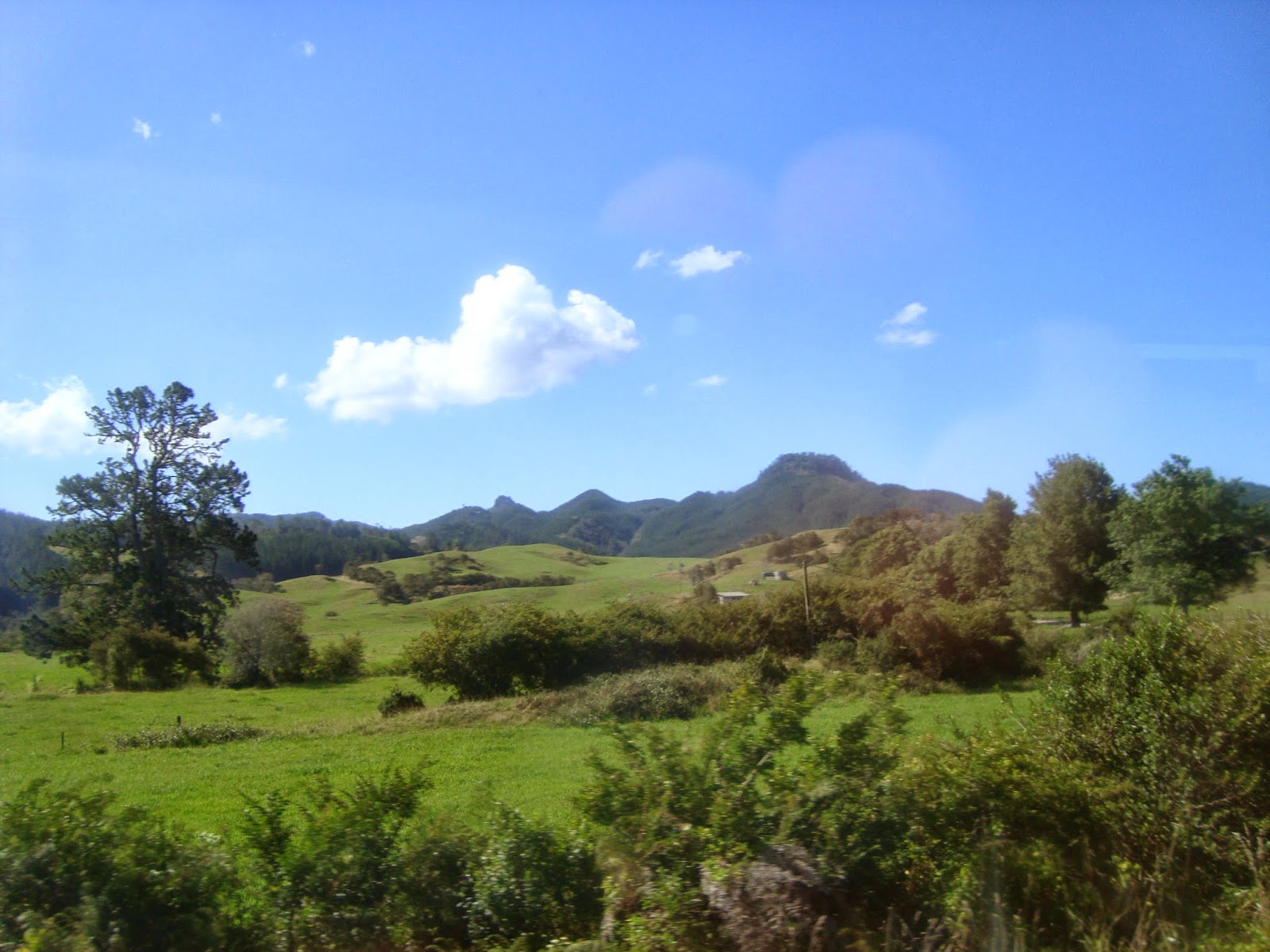
The North Island countryside flashed by the bus window, I stopped worrying and enjoyed the view and the way everything is small and sparsely populated here. 


After a longer ride than I realised based on the distance the bus dropped me in Whitianga, the late summer sun was hot but a beach and a nice warm sea waited for me just across the road from the hostel!
The beach across the road
Whitianga is a small town and it's dreadfully quiet at 6pm in the evening
After a night in a hostel by the beach I walked into town to meet with the cousins, look there I am.
The NZ Neesons have a boat in Whitianga, they invited me to go on a Marlin fishing trip with them (as part of a competition in their boat club). More firsts! I'd never been sea fishing before let alone MARLIN fishing, slept on a small boat, at sea, on a fishing expedition! 
Eventually in spite of me best efforts to get lost, my cousin-aunt and uncle found me in the wrong car park, the first job was to get supplies for the weekend, to the supermarket!
Lynn and Alex, I didn't mean to get them heading towards the booze section, honest!

The boat, Formula Four Play
We spent the first evening getting the boat ready and getting introduced, then early to bed. Waking up on the water was quite an experience. Dawn over the water never fails to impress.

We're off!


Another cousin, Dorrien, drove up overnight to come fishing with us. Lucky really as I had absolutely no idea what I was doing the whole time so was no help whatsoever! However Dorrien has a talent for these kind of things as shown when he filled two chiller boxes with fresh fish for the table during a break in the Marlin hunt.

Marlin fishing seems to involve setting a couple of lures on heavy duty lines and rods then towing them around at a particular speed until something bites, over the radio we could here other boats announcing encounters with fish, I guess we were unlucky. Later in the evening we anchored in a little cove. Dorrie and Alex caught a load of fish, I sat upstairs and went green from the motion of the boat. 
One of the best things about having a boat; just mooring anyplace you feel like!


That evening the weather began to deteriorate and the wind began to raise a healthy chop on the sea surface, Alex decided to head into a well-know anchorage for a bit of shelter for the night. Thank goodness as the sea there was much calmer than the cove we anchored in earlier. Seasickness can be quite debilitating so I was glad of the calm in order to be able to eat something and feel human again. The little natural harbour filled up with boats and yachts from the competition and also from other clubs and ports. After a beer and some of Dorrie's venison (he'd shot it himself) It was time to crash out after such an exhausting day. A day of firsts and great fun.
Dropping the anchor

The bay was filled with boats looking for a calm anchorage


Gutting and cleaning the days catch for storage


At sunrise the next morning we woke, the boat had wiggled all night on the end of it's anchor chain but sleep had not been affected. In fact a sleep is goo for gaining one's sea legs. I felt much better on the second day and was even able to join in on the fishing, we caught some more for the table but the Marlin were biting even less on the second day, I don't think anyone in the competition had any luck that day. We took a leisurely route back to the harbour, less sickness meant I was able to enjoy the view more, the islands off the Coromandel  are really impressive with the evidence of the geological violence in which they were formed.

That night there was a ceremony to present awards to the crews with the best catches, it was quite reminiscent of the allotment society's awards, similar humour, but with big fish not big potatoes.
The next day we tidied up and cleaned the boat (salt is your enemy) and put it to bed until the next trip. Doing this trip was a great way to meet the cousins and to be introduced to their way of life and of course their hobby. I was already noticing the similarities and differences with our branch of the family and with the initial nervousness over I was keen to meet the rest of the family and to see where they lived. We closed up and left to drive south to their farm. By now I was really looking forward a change of pace. 
What I get up to on the farm will have to wait until the next post!
Packed and ready to go

Sunday, 9 March 2014

Leaving India Behind, and my trousers.

Marina beach Chennai. My last sunset in India.
I left India five days ago, I have mixed feelings about leaving when I did. 
I'm trying to travel slowly, taking in each place I visit deeply and using the experience and slow pace in order to do some deep thinking. Before I arrived I believed that India was where a lot would change; I wanted to stay until my visa expired at the end of March and along the way keep my feelers out for work. However, with my feet on the ground things were different. Not in a bad way particularly, it was just different to experience I had anticipated.

So the curious reader may ask why not stay in India until my visa expired? The answer is I'm not exactly sure. during my first day in Auckland I overheard a guy in a hostel kitchen telling some young Irish backpackers about his plans to travel in India 'for 4-6 months', they were very impressed by this accomplished traveler, his way of reeling off names familiar to me (yes, in a familiar order too) in a cool french accent, those grungy pantaloons, the very suggestion of over 200 nights spent carelessly kipping on vomit-strewn night buses. Did I want to be that guy? Maybe, traveler adoration is a cheap thrill and that's not really what I was after.


This is what I get for flying Malaysia Airlines

Goodbye India
I could have moved my flight later in the month or even to my visa expiry date, I could have got a visa extension if I found something work-like to do as I had originally anticipated. I chose not to, I had seen enough for now.
Don't get me wrong, I wasn't unhappy traveling through India; I had a great experience, saw and did what I wanted to, went where I wanted to (I never even got started on the must-see list) I mostly avoided the hardcore tourist traps and as a result met the most wonderful people in the street, on buses and trains, it's amazing how different people are there when it is not their job to try to get you to spend some money. Couchsurfing allowed me to pretend that I lived where my host lived, which with the exception of Jungle Johnnie, was entirely believable (I could never imagine living in a tiger reserve) and rather nice. It also allowed me to meet and socialise with real, everyday people and in some cases to make friends (not many backpackers who go from hostel to hostel can say that). I got to know a few places very well and began to be accustomed to living there, I was close to looking for work in Bangalore, maybe teaching English, maybe Science in an English medium school. It felt like the sort of place where I could have stayed for a time at least.

I think the main factor in choosing to go when I did was that my love/hate relationship with the country, the people and the society had a time limit, if I stayed any longer and saw and heard more about the country, I may have started to do more hate than love. In retrospect perhaps that wasn't really a possibility, but it felt as if it could be at the time.
Realistically I got what I wanted from the experience and decided to move on. I was never going to check in to Amma's (hugging) Ashram and open my mind to pre-fabricated belief systems that are tailored to be sold to lost-soul westerners with a few thousand rupees to spare, nor was I about to embrace yoga wholeheartedly and check into a mountaintop yoga school where I would challenge my body and mind to fit into completely new shapes. Physically I managed to stay clean and healthy for the most part; I believe a good dose of Turkish village yoghurt before I left Istanbul made me resistant to the anticipated and much feared food poisoning. I harbour no regrets there, however I do regret not teaching the street kids something or other in the  Bandra beach promenade street school, though I'm not exactly sure what. My experience of India was different than most, not better, or worse.
I liked it because it was mine.

For that reason I wouldn't say I've been greatly changed by 'the India experience', I remember writing about how I wasn't so much expecting to find myself on my travels but to lose myself in a way. At least the parts that I considered undesirable, and about 10Kg. 
Somewhat to my own surprise I found and continue to find that there isn't much I'd like to lose, In fact I'm beginning to believe in myself increasingly. Now please do not think that John has seen the light or something, I'm just beginning to appreciate the little things more, learning that I am capable of doing just about anything  I want (if I want to enough, or desperately have to), learning that I can be very happy by myself and/or with other people, and a variety of people at that and I'm beginning to value my own patience and ability to understand the viewpoints of others (empathy if you want to call it that). I've realised that if you go out prepared to be a friend to everyone, you'll be surprised with how many nice people  you meet along the way and how the world changes when you do so- just a little but enough for you to notice like a tiny earthquake. I've earned to suspend my cynicism a little, but that it can be really useful at times.

Most poignantly I'm realising that the things that I miss about home and those places that I have to tear myself away from along the way are the things that I really should incorporate into my future. Learning what you value is an important part of going forward, because they are ultimately the things that will bring happiness. 

I still have no Idea what I'm going to do with myself when this is all over, luckily now I'm staying with my cousins in New Zealand I have a little time to think about that sort of thing instead of if I'm on the right train or what is safe to eat. The answer may come, it may not, the answer may well be that there is no question. In any case, my mind is open.


What do you mean you don't understand the cause of my love-hatey-ness ?

Auckland
Oh, My trousers? I left Arvind's house in the super-early morning and missed a pair of trousers drying on a chair, nothing exciting. Sorry.